


When most people think of honeybees, they picture small, hardworking insects buzzing between flowers and producing delicious honey. However, not all honeybees are the same size. Some species are significantly larger than the familiar honeybees found throughout North America.
Known as giant honeybees, these remarkable insects can grow to impressive sizes, build enormous colonies, and survive in some of the world's most challenging environments. The giant honey bee is particularly fascinating because of its size, unusual nesting behavior, and important role in pollination. Some species live high in the Himalayan mountains, while others inhabit tropical forests throughout Asia.
But just how large can giant honeybees grow? And what is the biggest bee ever recorded? Let's explore these extraordinary insects, including the world record for the largest bee species ever discovered.
What Are Giant Honeybees?
Giant honeybees are large species belonging to the genus Apis, the same genus that includes the familiar western honey bee (Apis mellifera). Unlike ordinary honeybees, which generally build their colonies inside enclosed spaces, giant honeybees frequently construct massive exposed honeycombs hanging from trees, cliffs, and other elevated structures.
Two particularly important species are:
- Giant honey bee (Apis dorsata): Found throughout South and Southeast Asia, this species is known for its large colonies and exposed honeycombs.
- Himalayan giant honey bee (Apis laboriosa): Considered the largest living honey bee species, it inhabits mountainous regions of Asia.
Both species are highly social insects that work together to protect their colonies, collect nectar, and raise young. Unlike many domesticated honeybees, giant honeybees are primarily wild insects and are not generally managed in conventional wooden beehives. For a look at how honeybees are classified more broadly, see our guide to bee varieties.

How Big Can Giant Honeybees Grow?
One of the most interesting characteristics of giant honeybees is their impressive body size. The Himalayan giant honey bee can average slightly more than 1.2 inches (3 centimeters) in length, making it the largest living honey bee species. By comparison, a typical western worker honey bee is approximately half an inch long.
This means a giant honey bee can be roughly twice as long as an ordinary worker honeybee. The larger body size of giant honeybees makes them especially noticeable when flying near flowers or gathering around their enormous colonies.
Their powerful wings, substantial bodies, and coordinated colony behavior help them survive in environments ranging from tropical forests to high mountain cliffs.
What Is the Biggest Bee Ever Recorded?
The world record for the largest living bee species belongs to Wallace's giant bee (Megachile pluto), an extraordinary insect native to Indonesia. According to Guinness World Records, female Wallace's giant bees can reach the following maximum documented dimensions.
Maximum recorded length
1.7 in
4.5 cm
Maximum wingspan
2.3 in
6 cm
Guinness World Records species record; these are maximum documented dimensions, not the measurements of one individually certified record-holder.
This enormous bee was first discovered in 1859 by naturalist Alfred Russel Wallace on the Indonesian island of Bacan. After decades without confirmed sightings, scientists rediscovered the species in 1981. Another remarkable rediscovery occurred in January 2019, when researchers located a living female in Indonesia.
However, there is one important distinction. Wallace's giant bee is not actually a honeybee. It belongs to the leafcutter bee family group and does not produce honey in the same manner as honeybees belonging to the genus Apis. Therefore, while Wallace's giant bee holds the record for the largest living bee species, the Himalayan giant honey bee holds the distinction of being the largest living true honey bee species.
Where Do Giant Honeybees Live?
Giant honeybees are primarily found in Asia, where suitable climates and abundant flowering plants support their colonies. The giant honey bee (Apis dorsata) inhabits countries including India, Nepal, Thailand, Malaysia, and Indonesia. These bees commonly build colonies in tropical forests, agricultural regions, and other environments with plentiful nectar sources.
The Himalayan giant honey bee (Apis laboriosa) lives in mountainous regions, including parts of Nepal, India, Bhutan, and neighboring Asian countries. These remarkable insects can establish colonies on steep cliffs at elevations exceeding 11,000 feet. Their ability to survive in rugged mountainous environments makes them one of the most unusual honey bee species in the world.
Giant Honey Bee Nests: Some of the Largest Honeycombs in Nature
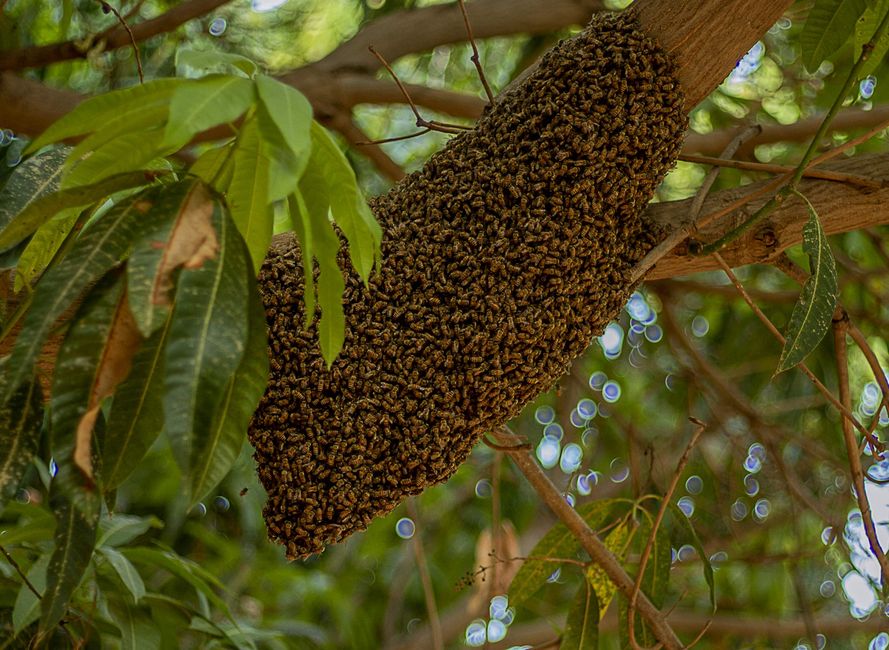
Perhaps the most impressive feature of giant honeybees is their enormous honeycomb construction. Unlike western honeybees, which commonly build multiple combs inside cavities, giant honeybees typically construct one large exposed comb. These structures can extend several feet across and may contain tens of thousands of bees.
Some documented colonies have exceeded 100,000 individuals. The entire surface of the honeycomb is often covered by layers of worker bees, forming a living protective curtain. Researchers have documented giant honey bee nesting aggregations containing hundreds of colonies in the same general location. These extraordinary nesting sites demonstrate the organizational abilities of giant honeybees and their importance within tropical ecosystems.
Are Giant Honeybees Dangerous?
Although giant honeybees are impressive insects, they are not naturally interested in attacking humans. Like other honeybees, their primary activities involve collecting nectar, gathering pollen, and protecting their colonies. However, giant honeybees can become highly defensive when their nests are threatened.
Because their colonies are exposed, these bees have developed coordinated defensive behaviors. One particularly fascinating behavior is called shimmering. During shimmering, thousands of worker bees rapidly move their abdomens in coordinated waves across the colony's surface. This creates a striking visual effect that can discourage predators from approaching.
Anyone encountering a giant honey bee colony should maintain a safe distance and avoid disturbing the nest. If you ever find bees nesting somewhere they shouldn't be, our guides to a wild honey bee hive explain safe options.
Do Giant Honeybees Produce Honey?
Yes. Giant honeybees produce honey just like other honey bee species. In fact, wild honey collected from giant honey bee colonies has been harvested by communities throughout Asia for generations.
One especially famous example involves Himalayan giant honeybees in Nepal. Traditional honey hunters sometimes climb steep cliffs using ropes and ladders to collect honey from exposed colonies. This activity requires considerable experience because of the dangerous terrain and defensive nature of the bees.
Some Himalayan honey has attracted attention because it may contain grayanotoxins derived from certain rhododendron flowers. Sometimes called mad honey, this substance can cause serious poisoning when consumed. Despite the risks associated with certain wild honey varieties, giant honeybees remain important producers of honey and valuable pollinators. To learn how honey is harvested more conventionally, see our guide to honey harvesting.

Why Giant Honeybees Are Important to the Environment
Giant honeybees play an essential role in maintaining healthy ecosystems. As they travel between flowering plants, they transfer pollen that allows many plants to reproduce. Their pollination activities support forests, agricultural crops, and native vegetation.
Because some giant honey bee colonies contain enormous numbers of workers, they can contribute significantly to pollination across large landscapes. However, habitat destruction, deforestation, human disturbance, and changes in flowering patterns can threaten their nesting and feeding environments. Protecting giant honeybees helps preserve biodiversity and the ecological relationships that support healthy forests and agricultural systems — the same principles behind our pollinator gardening guide.
Giant Honeybees vs. Regular Honeybees
Understanding the differences between giant honeybees and familiar western honeybees helps explain what makes these insects so remarkable.
| Feature | Giant honeybees | Western honeybees |
|---|---|---|
| Body size | Can reach approximately 1.2 inches or more | Workers commonly around 0.5–0.6 inches |
| Natural nesting | Large exposed combs | Enclosed cavities |
| Distribution | Primarily Asia | Found worldwide |
| Beekeeping | Primarily wild colonies | Widely domesticated |
| Honey production | Yes | Yes |
| Colony defense | Strong coordinated defense | Guards and colony defense |
While both types of bees produce honey and pollinate flowers, giant honeybees have developed distinctive survival strategies suited to their environments. Stingless relatives such as the meliponine bees are another fascinating branch of the bee family tree.
Frequently Asked Questions About Giant Honeybees
What is the largest honey bee in the world?
The Himalayan giant honey bee (Apis laboriosa) is considered the largest living honey bee species, with workers averaging slightly more than 1.2 inches long.
What is the largest bee ever recorded?
Wallace's giant bee (Megachile pluto) holds the Guinness World Records distinction for the largest living bee species. Females can reach 1.7 inches in length, with a wingspan of approximately 2.3 inches.
Are giant honeybees found in the United States?
True giant honeybees such as Apis dorsata and Apis laboriosa are not native to the United States. They primarily inhabit regions of Asia.
Can giant honeybees be kept in regular beehives?
Giant honeybees are not typically suitable for conventional beekeeping because of their exposed nesting habits, seasonal movements, and defensive behavior.
Do giant honeybees make more honey than ordinary honeybees?
Giant honeybees can maintain large honey stores, but honey production varies depending on colony size, climate, nectar availability, and environmental conditions. Their larger size does not automatically guarantee greater honey production.
Conclusion: The Incredible World of Giant Honeybees
Giant honeybees are among nature's most fascinating pollinators. From their impressive body size to their enormous exposed honeycombs, these insects demonstrate the extraordinary diversity of the bee world. The Himalayan giant honey bee is recognized as the largest living true honey bee species, while Wallace's giant bee holds the world record for the largest living bee species overall.
Although giant honeybees may look intimidating, they provide valuable ecological services through pollination and honey production. Learning about giant honeybees reminds us that bees come in many shapes and sizes, and that protecting their natural habitats is essential for maintaining healthy ecosystems.
Whether you are an experienced beekeeper, a nature enthusiast, or simply curious about the giant honey bee, these remarkable insects offer an extraordinary glimpse into the diversity of life on Earth.