
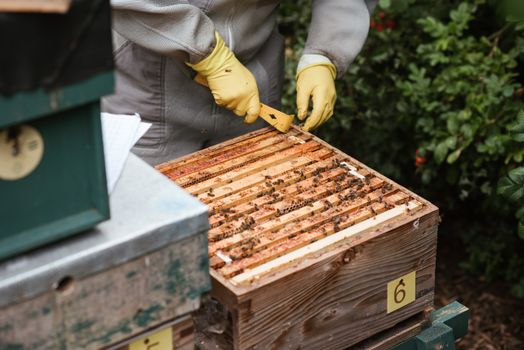
Best for beginners
Goatskin Gloves with Gauntlet Cuffs
Tough, long-cuffed, and forgiving. They get stiff when wet — dry them slowly.
Equipment & Gear
Your hands do the delicate work. Gloves decide how much you can feel — and how many stings you take. Most beekeepers end up owning two pairs.
Affiliate Disclosure: Honeybees 101 participates in affiliate programs, including Amazon Associates and eBay Partner Network. We may earn a commission from qualifying purchases at no extra cost to you.
| Material | Protection | Feel | Best for |
|---|---|---|---|
| Goatskin / leather | High | Low | Beginners and heavy lifting |
| Vented (mesh-backed) | Medium | Medium | Warm climates, long inspections |
| Nitrile / rubber | Low–medium | High | Queen handling, grafting, fine work |
Thin nitrile gloves are the compromise many experienced beekeepers choose: you can feel eggs, queen cells, and frames, and while a sting can occasionally get through, the thin layer usually prevents the stinger from reaching deep. Pair them with a leather pair for heavy days.
Best for beginners
Tough, long-cuffed, and forgiving. They get stiff when wet — dry them slowly.
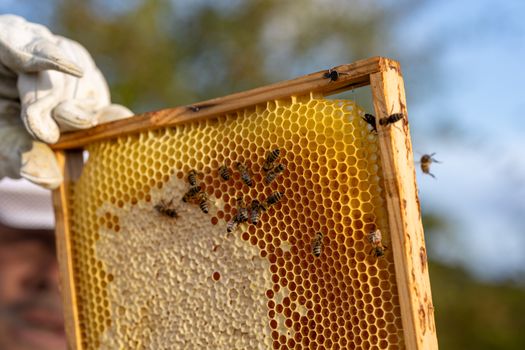
Best for dexterity
Thin, cheap, and grippy. Buy a box — you'll go through them, and they double as cleanup gloves.
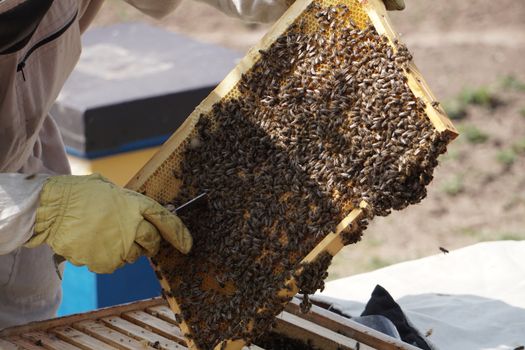
Best for hot weather
Mesh panels breathe in summer while the leather palm still blocks stings.