Beekeeping 101 · Reference
Beekeeping Terminology: The Beginner's Dictionary
"Check the brood pattern in the super after you see the queen cells." Every hobby has a language — here's the beekeeper's, in plain English.
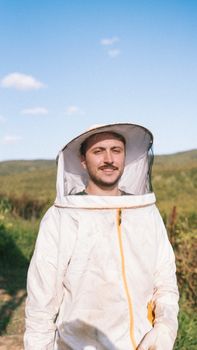 Emma MarloweFounder & Head Beekeeper Updated Sep 15, 2026
- Apiary
- The place where your beehives live — from one hive in a garden to hundreds in a field.
- Apis mellifera
- The western honeybee — the species kept by beekeepers worldwide.
- Bearding
- Bees clustering on the outside of the hive on hot nights, like a beard — a ventilation behavior, not an emergency.
- Bottom board
- The hive's floor; it supports the boxes and often has an entrance reducer and screened ventilation option.
- Brood
- Eggs, larvae, and pupae — the young bees. "Brood nest" is the area of the hive where the queen lays.
- Brood pattern
- How evenly a queen has laid across a frame. A solid, compact pattern signals a healthy queen.
- Cappings
- The wax caps sealing ripe honey cells or mature brood. "Capped honey" is ready to harvest; "capped brood" is about to emerge.
- Caste
- The three adult forms in a colony: queen, worker, and drone.
- Cluster
- Bees huddling together to keep warm in winter — the winter cluster shivers to generate heat.
- Drone
- Male honeybee; exists to mate with queens. No stinger, no foraging.
- Drawn comb
- Wax cells already built out by bees — bees move into drawn comb far faster than bare foundation.
- Entrance reducer
- A wooden block that narrows the hive entrance — used in winter and for new colonies to defend easily.
- Forager
- A worker bee old enough to fly out collecting nectar, pollen, water, or propolis.
- Foundation
- A sheet (wax or plastic) embossed with cell outlines that bees build comb onto, keeping it straight.
- Hive tool
- A flat prying bar with a hook — used to separate glued-together boxes and frames. Your daily companion.
- Honey flow (nectar flow)
- The period when masses of flowers bloom and bees pack in nectar — the season's "work rush."
- Langstroth hive
- The stackable-box hive invented by Lorenzo Langstroth; the world's most common hive type.
- Mead
- The ancient fermented drink made from honey and water.
- Nuc (nucleus)
- A starter colony on frames — usually 3–5 — with bees, brood, stores, and a queen. The beginner's easiest start.
- Package
- Bulk bees in a screened box with a caged queen, sold by weight (typically 2–3 lb).
- Pollen basket
- A concave area on a forager's hind legs where pollen is packed into colorful balls.
- Propolis
- "Bee glue" — resin collected from trees, used to seal gaps and polish the hive. Also a folk remedy.
- Queen excluder
- A grill over the brood boxes sized so workers pass but the queen cannot — keeping honey supers free of brood.
- Queen cell
- The peanut-shaped cell housing a future queen. Its location hints at swarming or supersedure.
- Requeen
- Replacing an old, failing, or aggressive queen with a fresh one — a standard yearly management practice.
- Royal jelly
- A protein-rich secretion fed to all young larvae and exclusively to queen larvae — the "queen-making" diet.
- Smoker
- The bellows device that puffs cool smoke, masking alarm pheromones and calming guards.
- Split
- Dividing one strong colony into two (or more) to grow your apiary and prevent swarms.
- Super
- A box placed above the brood nest — usually (not always) used for honey. "Medium super" fits the size.
- Supersedure
- The colony quietly replacing its own failing queen with a daughter — no swarming involved.
- Swarm
- Roughly half a colony leaving with the old queen to found a new nest — the colony's natural reproduction.
- Varroa mite
- The parasitic mite (Varroa destructor) that is the #1 threat to honeybee colonies worldwide. See Bee Health.
- Waggle dance
- The figure-eight dance foragers use to tell hive-mates the direction and distance of food.
- Winter cluster
- The tight ball of bees that keeps the colony warm through winter, consuming honey as fuel.
- Worker
- The (nearly always) sterile female bee that does all the colony's work.
See the print-friendly full glossary in Resources, or head back to the Beekeeping 101 learning path.