
Is the Honey Ripe?
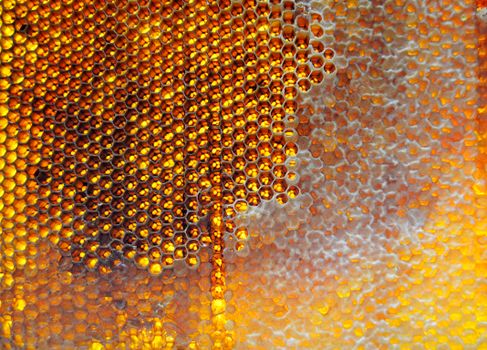
Ripe honey is capped — workers have sealed the cell with a thin wax lid because the moisture content has dropped to roughly 17–18%. Two checks before you pull a frame:
- The shake test: hold the frame horizontally and give it a sharp downward jerk. If nectar sprays out, it's not ripe — leave it.
- Capping coverage: aim for 80%+ capped cells. If only the outer edges are capped, wait.
A refractometer (a small optical tool) gives you the exact moisture percentage. Under 18.6% is the usual safety target; under 17.5% is ideal for long storage. Unripe honey ferments.
Only Take the Surplus
Your first duty is the colony's winter survival. Before harvesting, confirm that the brood boxes hold enough stores — many beekeepers leave the equivalent of a full deep frame per box untouched, then take only frames from the supers above. In cold climates, a colony may need 60–90 lb of stores to make it to spring.
First-year colonies: there's no shame in taking nothing. A young colony that keeps all its honey is far more likely to survive winter and give you a strong harvest the next year.
Extracting & Storing
- Clear the bees. Use a bee escape, a brush, or a fume board; never leave a frame of honey sitting open in the yard.
- Uncap with a hot knife or uncapping roller over a tray, saving the cappings (they're excellent for chewing and for making candles).
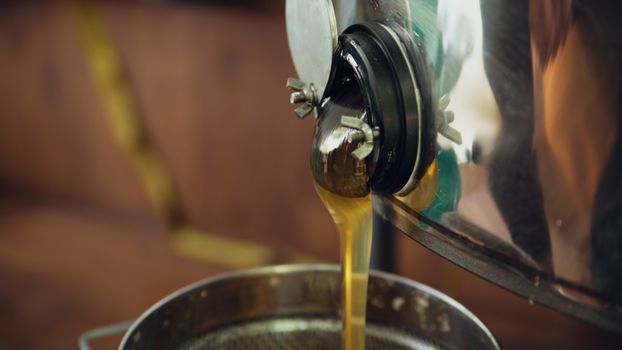
- Spin in a manual or motorized extractor until the frames are light. Stack the empties for the bees to clean up after.
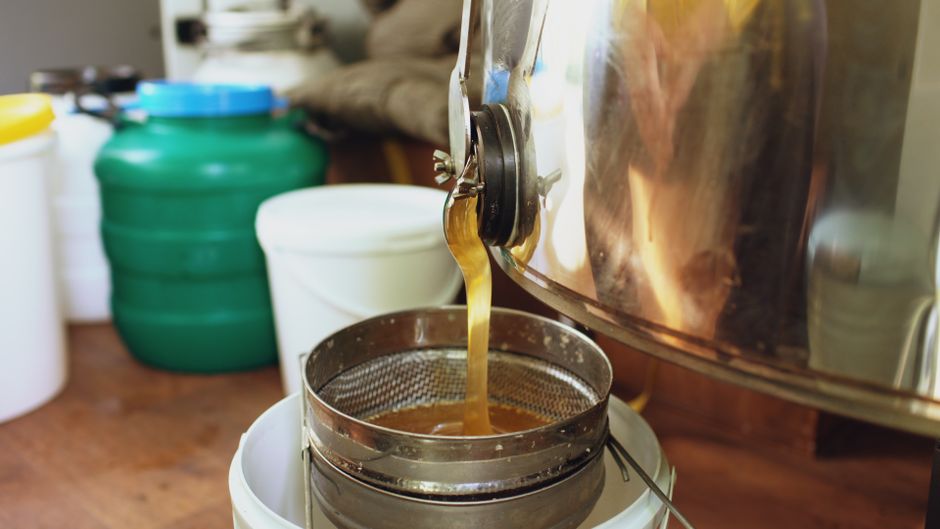
- Strain through a mesh sieve into a settling bucket; let it sit a day or two so bubbles and wax bits rise.
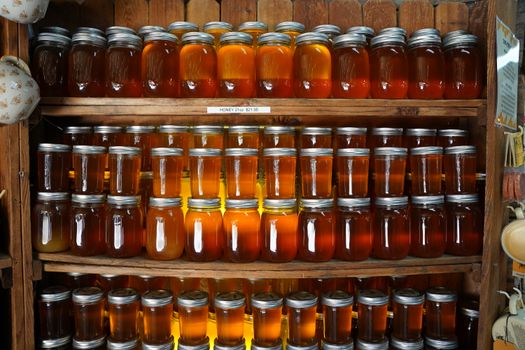
- Bottle in clean glass jars at room temperature. Label with the year and the floral source.
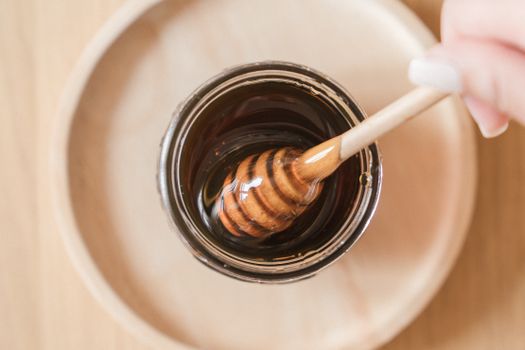
Store honey in a cool, dark, dry place. Crystallization is normal and reversible with a warm-water bath. Never microwave or boil honey — you'll damage the enzymes and flavor.
Extractor, uncapping tool, filter, and bottling gear: see Honey Extractors & Harvest Gear.
Honey Harvesting FAQs
What time of year do you harvest honey?
In the northern hemisphere, the main harvest usually comes after the spring/summer flow ends — often late summer. Some regions have two harvests (spring and fall). Let the capped frames, not the calendar, decide.
Do I need a centrifuge extractor?
No — you can crush-and-strain comb honey for your first small harvest. But a 2-frame manual extractor (usually $150–$300) pays for itself fast, keeps the comb reusable, and is much less messy.
Why did my honey crystallize?
That's natural — honey is a supersaturated sugar solution, and glucose crystallizes over time. Varieties with high glucose (like canola or clover) set fastest. Warm the jar gently in water to reliquefy.