

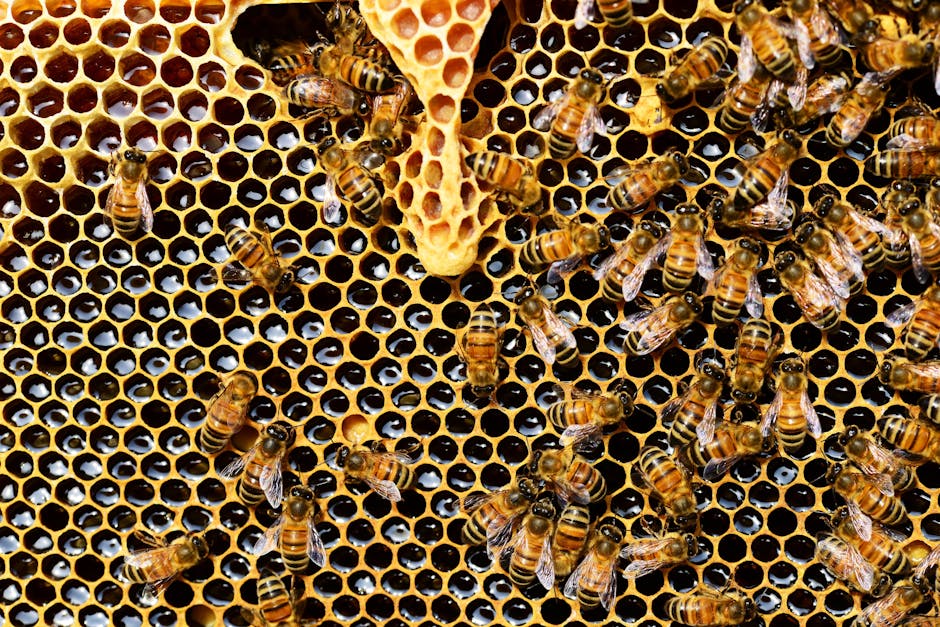
Inside a thriving honeybee colony, thousands of bees work together to maintain one of nature's most fascinating social systems. At the center of that colony is the queen bee—the only female normally responsible for laying the eggs that sustain the hive. But what makes a queen different from an ordinary worker bee? A major part of the answer is queens jelly, more commonly known as royal jelly.
Queens jelly is a nutrient-rich substance produced by young worker bees and fed to developing larvae. While all honeybee larvae receive glandular food early in development, larvae selected to become queens are provisioned abundantly with royal jelly throughout their development. This nutritional difference helps trigger the remarkable biological changes that produce a fertile queen rather than a worker.
For beekeepers and anyone fascinated by honeybees, understanding queens jelly provides an incredible look into how a colony creates its most important individual.
Big picture: a queen emerges in about 16 days from the egg, versus roughly 21 for a worker — and she can lay 1,000 to 2,000 eggs a day at peak.
What Is Queens Jelly?
Queens jelly is a creamy secretion produced primarily by glands in the heads of young worker bees, often called nurse bees. It is usually white to pale yellow, with a thick consistency and a distinctive acidic taste.
The substance contains water, proteins, sugars, fats, vitamins, minerals, and other biologically active compounds. Its exact composition can vary depending on factors such as the colony, environment, nutrition, and season.
Unlike honey, which bees produce largely from flower nectar and store as an energy-rich food supply, queens jelly is produced directly by worker bees. Nurse bees consume pollen and other foods and use specialized glands to produce larval food.
This makes royal jelly an essential component of honeybee development.
How Queens Jelly Creates a Queen Bee
One of the most interesting facts about honeybees is that worker bees and queen bees are both female and generally develop from fertilized eggs. The dramatic differences between them arise largely during larval development.
When a colony needs a new queen, workers construct or use specialized queen cells. These cells are considerably different from ordinary worker cells and provide space for the developing queen larva.
The selected larva receives an abundant supply of queens jelly.
That nutritional environment influences gene expression and development. Instead of becoming a smaller worker bee with reproductive organs that are normally inactive, the larva develops into a much larger, fertile queen.
A queen develops faster than a worker as well. Under typical conditions, a honeybee queen emerges approximately 16 days after the egg is laid, compared with roughly 21 days for a worker.
The result is one of the most impressive examples of developmental specialization in the insect world.
Queens Jelly and the Queen Bee's Extraordinary Life
The difference created during queen development has consequences throughout the bee's life.
A healthy queen can lay an extraordinary number of eggs during peak colony growth. Under favorable conditions, she may lay well over 1,000 eggs per day and can sometimes approach or exceed 2,000.
Worker bees, meanwhile, perform completely different jobs. Depending on their age, workers clean cells, feed larvae, produce wax, guard the entrance, regulate hive conditions, process nectar, and eventually forage outside the colony.
A queen also typically lives much longer than a worker bee.
Worker honeybees produced during active seasons may live only several weeks because of the demanding nature of their work. Queens can potentially survive for several years, although commercial and hobby beekeepers may replace queens sooner when egg-laying performance begins declining.
The developmental effects associated with queens jelly therefore extend far beyond simply making the queen larger.
How Nurse Bees Produce Queens Jelly
The production of queens jelly is another example of the sophisticated division of labor within a honeybee colony.
Young adult worker bees commonly serve as nurse bees before transitioning to other duties. Their glands produce secretions used to feed larvae and queens.
Nurse bees continually inspect developing brood and provide food according to the needs of the colony.
When raising a queen, workers place large quantities of royal jelly inside the queen cell. Anyone who has opened a developing queen cell at the right stage may see the queen larva seemingly floating on a bed of creamy food.
For queen breeders, the presence of abundant queens jelly is particularly important because well-fed queen larvae have the opportunity to develop into robust queens.
Queens Jelly and Queen Rearing
Understanding queens jelly becomes especially useful when learning how beekeepers raise queens.
Professional and experienced hobbyist beekeepers can encourage colonies to produce multiple queens through controlled queen-rearing techniques.
One common method involves grafting extremely young larvae into artificial queen cups. These cups are placed into colonies specially prepared to raise queens.
Worker bees recognize the larvae as potential queens and begin feeding them generously with queens jelly while extending the cups into full queen cells.
Timing matters tremendously.
Beekeepers want very young larvae because queen development begins rapidly. Selecting larvae of the appropriate age allows nurse bees to provide the nutritional conditions necessary for proper queen development from an early stage.
After the queen cells are completed, they can eventually be transferred to mating nuclei or other colonies where the emerging queens continue their development.
Is Queens Jelly the Same as Royal Jelly?
Yes. In most contexts, queens jelly refers to what is commonly called royal jelly.
Royal jelly is the standard term used by beekeepers, researchers, supplement manufacturers, and the general public. The phrase queens jelly describes the substance particularly well because of its close association with queen development and queen nutrition.
It should not be confused with honey.
Honey is primarily a carbohydrate-rich food produced from nectar or honeydew and stored by the colony. Royal jelly is a glandular secretion produced by nurse bees and used primarily for feeding developing larvae and the queen.
Can Humans Eat Queens Jelly?
Humans have harvested royal jelly for many years, and it is sold commercially as a dietary supplement and food ingredient.
Products may include fresh royal jelly, freeze-dried powder, capsules, or mixtures containing honey and royal jelly.
However, consumers should distinguish between the fascinating biological role of queens jelly in honeybees and health claims made about royal jelly for humans. A substance having dramatic developmental effects on honeybees does not automatically mean it produces comparable effects in people.
Royal jelly can also cause allergic reactions, particularly in individuals sensitive to bee products. Anyone with significant allergies should exercise appropriate caution and seek medical guidance when necessary.
Why Queens Jelly Matters to Beekeepers
For beekeepers, queens jelly represents much more than an unusual substance inside the hive.
It is directly connected to colony reproduction, queen replacement, swarming, and hive survival.
A colony may begin producing queen cells for several reasons. It may be preparing to swarm, replacing a failing queen, or responding to the sudden loss of its existing queen.
Recognizing queen cells containing larvae and queens jelly can therefore provide valuable information about what is happening inside the colony.
For example, discovering numerous developing queen cells during spring may indicate swarm preparations. Finding emergency queen cells after a queen disappears suggests that workers are attempting to produce a replacement.
Learning to read these signs is an important part of becoming a knowledgeable beekeeper.
The Amazing Biology Behind Queens Jelly
Few substances demonstrate the complexity of honeybee society as clearly as queens jelly.
A queen and worker can begin with remarkably similar genetic potential, yet differences in nutrition and developmental environment help send them down completely different biological paths. One becomes a worker responsible for maintaining the colony, while another develops into a reproductive queen capable of producing the next generation.
This process illustrates that a honeybee colony functions as much more than a collection of individual insects. Thousands of bees cooperate through feeding, communication, reproduction, temperature regulation, and division of labor.
The production and use of queens jelly is an essential part of that system.
Final Thoughts on Queens Jelly
Queens jelly is one of the most fascinating substances found inside a honeybee colony. Produced by nurse bees and supplied abundantly to developing queen larvae, it plays a central role in transforming a young female larva into a fertile queen.
For beekeepers, understanding queens jelly also makes it easier to understand queen cells, swarming, queen replacement, and professional queen-rearing techniques.
The next time you inspect a queen cell and see a tiny larva surrounded by creamy royal jelly, consider what is happening inside that cell. In only a matter of days, the colony is using nutrition, instinct, and complex honeybee biology to create its next queen.
That remarkable transformation is one more reason queens jelly and the honeybees that produce it continue to fascinate beekeepers around the world.