

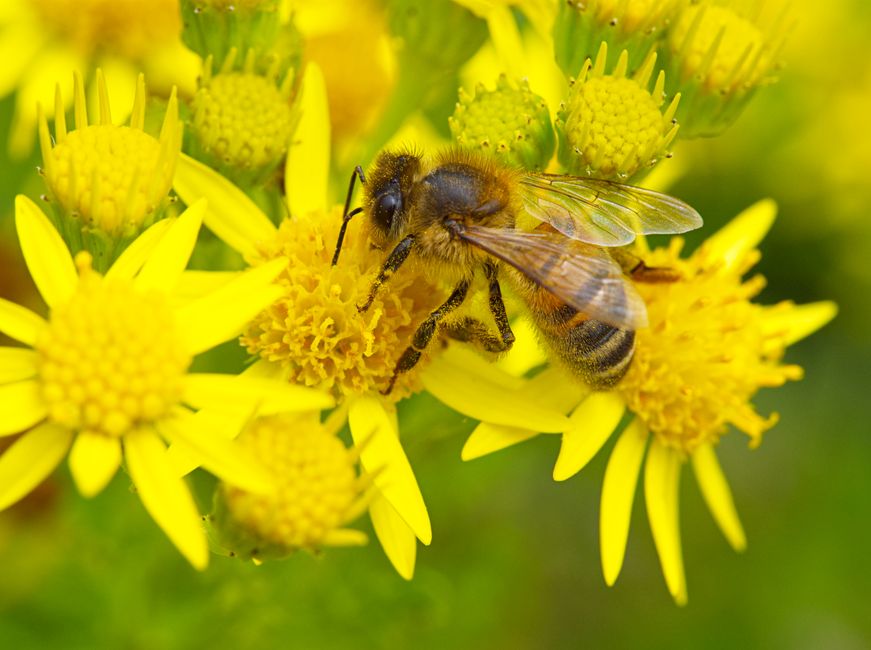
When most people picture a busy honey bee colony, they imagine hundreds or thousands of bees flying from flower to flower, collecting nectar and pollen before returning to the hive. Nearly all of those hardworking bees are worker bees. The worker bee is the backbone of a honey bee colony, performing almost every job necessary to keep the hive healthy, productive, and alive.
From feeding young larvae to producing beeswax, guarding the entrance, cleaning the hive, regulating temperature, and gathering food, the worker bee has an extraordinary list of responsibilities. Understanding the life of a worker bee is one of the best ways to appreciate how organized and complex a honey bee colony really is.
Big picture: worker bees make up the overwhelming majority of the adult bees in a colony — and an egg becomes an adult worker in about 21 days.
What Is a Worker Bee?
A worker bee is a female honey bee that normally does not reproduce. Worker bees make up the overwhelming majority of the adult population in a healthy honey bee colony.
A typical colony consists of three primary types of bees: the queen, drones, and worker bees. The queen's primary role is reproduction, while male drones primarily exist to mate with virgin queens. The worker bee, meanwhile, performs most of the daily work required to maintain the colony.
During periods of strong colony growth, thousands of worker bees may be present inside a single hive. Their collective efforts allow the colony to gather food, raise young bees, defend itself, and prepare for winter.
The Life Cycle of a Worker Bee
Every worker bee begins life as an egg laid by the queen.
The queen deposits a fertilized egg into a worker-sized cell in the honeycomb. After approximately three days, the egg hatches into a tiny larva. Nurse bees feed the developing larva, which grows rapidly.
Eventually, the cell is capped with beeswax, allowing the developing bee to complete its transformation through the pupal stage.
For a honey bee worker, development from egg to emerging adult generally takes about 21 days.
Once the new worker bee emerges from her cell, she doesn't immediately fly outside looking for flowers. Instead, she begins performing important jobs inside the colony.
Her responsibilities gradually change as she gets older.
What Does a Worker Bee Do?
One of the most fascinating aspects of honey bee biology is how the job of a worker bee changes throughout her life.
Young workers generally perform duties inside the hive, while older workers eventually become foragers.
Cleaning the Hive
One of the first jobs of a newly emerged worker bee is cleaning.
Honey bees are remarkably hygienic insects. Worker bees clean cells so the queen can lay new eggs inside them. They also help remove debris and dead bees from the colony.
Keeping the hive clean can help reduce disease and create suitable conditions for raising brood.
Feeding Developing Bees
As a worker becomes slightly older, she may begin working as a nurse bee.
Nurse bees care for developing larvae by providing food. Young larvae receive nutrient-rich secretions produced by worker bees.
This is an extremely important responsibility because thousands of developing bees may need to be fed during periods of rapid colony growth.
Caring for the Queen
Some workers also attend to the queen.
These bees feed, groom, and surround her as she moves across the comb laying eggs.
The queen produces chemical signals called pheromones that help regulate colony behavior and organization. Worker bees help distribute these chemical signals throughout the colony.
Worker Bees Produce Beeswax
One of the most impressive abilities of the worker bee is producing beeswax.
Young adult workers have wax-producing glands on the underside of their abdomen. Wax appears as tiny scales that workers manipulate and shape to construct honeycomb.
Honeycomb is the basic infrastructure of the hive.
Bees use these hexagonal cells to store honey and pollen and to raise developing bees.
Producing and building comb requires substantial colony resources, which is one reason drawn honeycomb can be extremely valuable to beekeepers.
Worker Bees Make Honey
The worker bee also plays the central role in honey production.
Forager bees collect nectar from flowers and transport it back to the colony in a specialized organ commonly called the honey stomach or crop.
After returning to the hive, nectar is transferred among workers and placed into honeycomb cells. Bees process the nectar while reducing its moisture content.
Worker bees also fan their wings to circulate air through the hive, helping excess moisture evaporate.
Once the honey reaches an appropriate moisture level, bees cap the cell with wax.
This stored honey becomes an important source of carbohydrates for the colony, especially when flowers are unavailable.
Collecting Pollen
Nectar isn't the only resource collected by a worker bee.
Foragers also collect pollen.
Pollen provides important nutrients, particularly protein and fats, that are essential for raising brood.
A worker bee collects pollen from flowers and packs it onto structures on her hind legs commonly called pollen baskets, or corbiculae.
If you've ever noticed a honey bee flying around with colorful yellow, orange, or reddish clumps on its back legs, you were probably watching a pollen-collecting worker returning to her colony.
Worker Bees Guard the Hive
Protecting thousands of bees and valuable stores of honey requires security.
Worker bees provide it.
Guard bees position themselves near the hive entrance and inspect incoming bees. They can respond aggressively when they detect potential threats.
A worker bee has a barbed stinger connected to a venom sac. When defending the colony against certain threats, she may sting.
When a honey bee worker stings a mammal, the barbed stinger can become lodged in the skin. The bee may then die after pulling away.
This defensive behavior demonstrates how strongly worker bees protect their colony.
Worker Bees Control Hive Temperature
Honey bee colonies also have an impressive ability to regulate their internal environment.
When temperatures become hot, workers may collect water and distribute it throughout the colony. Other workers fan their wings, creating airflow and promoting evaporative cooling.
During cold weather, honey bees cluster together and generate heat through muscular activity.
This cooperative behavior helps protect the queen and developing brood from dangerous temperature extremes.
How Long Does a Worker Bee Live?
The lifespan of a worker bee depends heavily on the season and her workload.
Workers produced during the active spring and summer months may live only several weeks because foraging is physically demanding. A worker can fly considerable distances over her lifetime while repeatedly visiting flowers and returning to the hive.
Workers produced for overwintering can survive considerably longer.
These longer-lived winter bees help maintain the colony until spring flowers become available and the queen begins dramatically increasing brood production again.
How Far Can a Worker Bee Fly?
A foraging worker bee may travel several miles from the colony when necessary to locate food and water.
However, bees generally benefit from having productive forage relatively close to their hive.
Worker bees may visit numerous flowers during a single foraging trip while searching for nectar or pollen.
Once a profitable food source is discovered, the bee can communicate information about its location to other workers.
The Famous Waggle Dance
One of the most remarkable behaviors associated with the worker bee is the waggle dance.
A returning forager can perform movements on the comb that communicate information about a valuable food source.
The direction and characteristics of the dance help other bees locate the resource.
This communication system allows thousands of individual worker bees to operate as part of a highly coordinated colony.
Instead of every bee randomly searching the landscape, successful foragers can recruit other workers to productive patches of flowers.
Worker Bee vs. Queen Bee
Both the queen and worker bees are female, but their roles are dramatically different.
The queen normally specializes in reproduction and can lay large numbers of eggs during peak colony growth.
The worker bee, by comparison, performs the colony's maintenance, nursing, construction, defense, temperature regulation, and food-gathering activities.
Their physical development is also different because queen larvae receive different nutrition and develop into reproductively specialized adults.
This difference demonstrates how nutrition and colony biology can dramatically influence the development of honey bees.
Why Worker Bees Are So Important
Without worker bees, a honey bee colony could not survive.
Every major colony function depends on them.
Workers raise new bees, care for the queen, build honeycomb, collect pollen, gather nectar, make honey, defend the colony, regulate temperature, remove waste, and maintain the hive.
Even though the queen receives much of the attention because she lays the eggs, the worker bee keeps the colony functioning every hour of every day.
For beekeepers, observing worker behavior can also provide valuable information about colony health. Strong flight activity, incoming pollen, brood care, comb construction, and food storage can all offer clues about what is happening inside the hive.
Final Thoughts on the Worker Bee
The worker bee is one of nature's most remarkable examples of cooperation.
One individual worker may seem insignificant among tens of thousands of bees, but together they create a highly organized society capable of building intricate honeycomb, raising thousands of young bees, regulating hive temperatures, communicating food locations, defending their home, and storing enough food to survive periods when flowers disappear.
The next time you see a honey bee visiting a flower, there's an excellent chance you're watching a worker bee performing one small part of an enormous colony-wide operation.
She may be collecting nectar for honey, gathering pollen for developing brood, or searching for resources to bring home.
Whatever her mission, the worker bee truly earns her reputation as one of the hardest-working creatures in the natural world.