

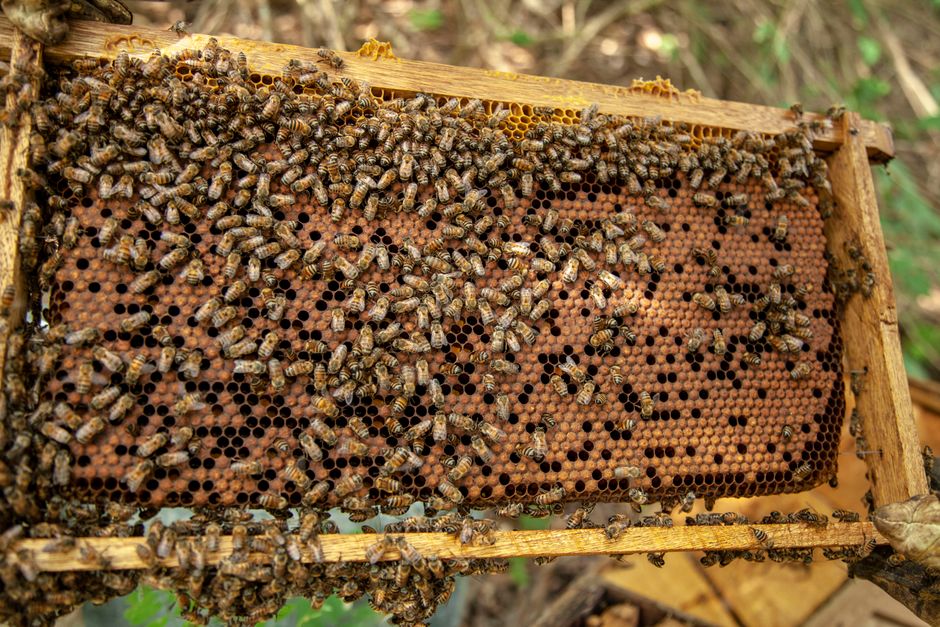
What Are Saskatraz Bees?
If you're interested in beekeeping, you've probably heard about Saskatraz bees. These increasingly popular honey bees have gained attention among both beginner and experienced beekeepers because of their potential for strong honey production, winter survival, and resistance to certain pests and diseases.
Saskatraz bees are a selectively bred population of Western honey bees (Apis mellifera) developed through a breeding program originating in Saskatchewan, Canada. The program focuses on improving important characteristics that help honey bee colonies survive and remain productive.
Unlike naturally occurring honey bee subspecies, Saskatraz bees are the result of selective breeding. Their development involves identifying colonies with desirable characteristics and using those genetics to produce future generations.
Today, Saskatraz bees are available through participating queen breeders and suppliers in North America. Their reputation for productivity and resilience has made them an appealing option for beekeepers looking to establish healthy, manageable colonies. For the basics of how a colony works, see our honeybee biology overview.
Big picture: Saskatraz is a selectively bred line, not a natural subspecies. Its traits — productivity, gentleness, winter hardiness and partial Varroa tolerance — depend on the breeder and the individual colony.
The History and Origin of Saskatraz Bees
The development of Saskatraz bees began in Saskatchewan, where beekeepers face challenging conditions, including long winters, short growing seasons, and significant pressure from parasites and diseases.
The Saskatraz breeding program was established to identify honey bee colonies that could perform well under these demanding conditions.
Researchers and breeders evaluated colonies for several important characteristics, including:
- Honey production and colony productivity
- Winter survival and spring buildup
- Resistance or tolerance to Varroa mites
- Brood health and disease tolerance
- Colony temperament
- Overall colony strength
Through selective breeding, the program developed honey bee lines with combinations of these desirable traits.
The name "Saskatraz" reflects the program's Saskatchewan origins.
Although the breeding program originated in Canada, Saskatraz genetics have since become available to beekeepers in the United States.
Characteristics of Saskatraz Bees
One reason Saskatraz bees have become popular is their combination of characteristics that may benefit both hobbyist and commercial beekeepers.
1. Strong Honey Production
Honey production is one of the most attractive characteristics associated with Saskatraz bees.
Colonies selected for productive foraging and strong populations may collect substantial amounts of nectar during favorable conditions.
However, honey production depends on several factors, including weather, available flowers, colony health, and beekeeper management.
A productive Saskatraz colony may provide an excellent honey harvest, but no honey bee strain guarantees high yields.
2. Improved Winter Survival
Winter survival is especially important for beekeepers living in colder climates.
Because Saskatraz bees were developed in Saskatchewan, their breeding history includes selection under demanding seasonal conditions.
Well-managed colonies may demonstrate good overwintering performance when provided with adequate food stores, healthy populations, and protection from excessive moisture.
For beekeepers in northern states and mountainous regions, this characteristic can be particularly appealing.
3. Varroa Mite Resistance
Varroa mites are among the most serious threats facing honey bee colonies.
These parasites feed on developing and adult bees and transmit viruses that can weaken or destroy entire colonies.
Some Saskatraz breeding lines have been selected for traits associated with improved resistance or tolerance to Varroa mites.
However, Saskatraz bees are not immune to Varroa mites.
Beekeepers must still monitor mite populations and use appropriate integrated pest management strategies when necessary. See our bee health guide for monitoring and treatment basics.
4. Gentle Temperament
Many beekeepers describe Saskatraz bees as relatively gentle and manageable.
A calm colony makes routine inspections, honey harvesting, and hive maintenance easier.
This characteristic can be particularly valuable for beginners learning how to handle bees.
Nevertheless, temperament varies among individual colonies. Weather conditions, queen genetics, nectar availability, and disturbances can all influence defensive behavior.
5. Strong Colony Development
Saskatraz bees are also selected for productive colony development.
Strong spring buildup can help colonies take advantage of early nectar flows and prepare for the main honey-producing season.
Beekeepers should monitor growing colonies carefully because rapid population increases can create congestion and contribute to swarming.
Saskatraz Bees vs. Italian Bees vs. Carniolan Bees
Beekeepers often compare Saskatraz bees with Italian and Carniolan honey bees when choosing queens.
Although individual colonies vary, these general characteristics can help explain the differences.
| Characteristic | Saskatraz Bees | Italian Bees | Carniolan Bees |
|---|---|---|---|
| Honey production | Selected for high productivity | Often excellent | Often excellent |
| Temperament | Often gentle | Generally gentle | Generally gentle |
| Winter survival | Important breeding goal | Depends on local conditions | Often strong |
| Spring buildup | Selected for strong development | Often steady | Often rapid |
| Varroa resistance | Selected in certain lines | Variable | Variable |
| Swarming tendency | Varies by line | Often moderate | Can be high |
These comparisons are generalizations rather than guarantees. Queen quality, local adaptation, and colony management often matter more than the name of a particular bee strain. To learn more about the bees most of us know, see our American honey bee guide.
Are Saskatraz Bees Good for Beginners?
Saskatraz bees can be a good choice for beginner beekeepers, particularly when purchased from a reputable breeder producing healthy, well-mated queens.
Their potential for manageable temperament, productive colony growth, and successful overwintering makes them attractive to people establishing their first apiary.
However, beginners should understand that even carefully selected honey bees require consistent management.
New beekeepers must learn how to inspect brood patterns, recognize queen problems, monitor Varroa mites, prevent swarming, and maintain adequate food supplies. Our getting started guide and beginner FAQ cover the essentials.
Joining a local beekeeping association or working with an experienced mentor can significantly improve the chances of success.
How Much Honey Do Saskatraz Bees Produce?
One of the most common questions about Saskatraz bees concerns their honey-producing ability.
There is no reliable universal figure for how much honey a Saskatraz colony will produce annually.
A strong colony in an excellent nectar-producing location may generate substantial surplus honey, while another colony in poor conditions may produce little or none.
Important factors influencing honey production include:
- Availability of nectar-producing plants
- Weather during the honey flow
- Colony population and queen performance
- Hive space and swarm management
- Parasite and disease pressure
- Length of the local growing season
To maximize production, beekeepers should maintain healthy colonies, provide sufficient honey supers, and avoid unnecessary disturbances during major nectar flows. Our honey harvesting guide covers the next steps.
Can Saskatraz Bees Survive Cold Winters?
Saskatraz bees may be particularly attractive to beekeepers operating in regions with cold winters.
Their breeding background includes selection for winter survival, but successful overwintering still depends heavily on management.
Before winter arrives, beekeepers should ensure colonies have sufficient honey or supplemental food, healthy winter bee populations, and controlled Varroa mite levels.
Good ventilation and moisture management are also important because condensation inside a hive can harm overwintering bees.
A colony with desirable genetics can still perish if it enters winter weak, heavily infested with mites, or short of food. See our seasonal beekeeping guide and beekeeping calendar for a month-by-month plan.
Are Saskatraz Bees Good for Beekeeping in West Virginia?
For beekeepers in West Virginia and the Appalachian region, Saskatraz bees may be worth considering.
West Virginia experiences a combination of cold mountain winters, warm summers, and diverse seasonal nectar flows.
Saskatraz bees may perform well in these conditions, particularly when purchased from breeders familiar with similar climates.
The state's flowering trees, wildflowers, and other nectar sources provide opportunities for productive honey harvests.
However, regional performance should be evaluated locally. A Saskatraz queen that performs well in one location may not deliver identical results in another.
West Virginia beekeepers should pay particular attention to winter food stores, mite management, and spring colony development.
Where Can You Buy Saskatraz Bees?
Saskatraz bees are commonly sold through honey bee breeders and suppliers offering Saskatraz queens or nucleus colonies.
When purchasing Saskatraz bees, look for suppliers that clearly explain the origin of their breeding stock.
Ask whether the queens are produced from selected Saskatraz breeding lines and whether they are open-mated or instrumentally inseminated.
This distinction matters because open-mated queens may produce offspring with genetics influenced by drones from surrounding colonies.
Also consider the breeder's reputation, shipping policies, queen replacement guarantees, and disease management practices.
Purchasing healthy bees from a reputable supplier is essential regardless of the strain you choose. Our beekeeping organizations directory can help you find trusted sources and local associations.
Potential Disadvantages of Saskatraz Bees
Although Saskatraz bees offer several appealing characteristics, they are not necessarily the best option for every beekeeper.
One potential limitation is genetic variability. Commercially available Saskatraz queens may differ considerably depending on the breeder and mating conditions.
Another consideration is cost. Specialty queens may command higher prices than more commonly available honey bee strains.
Additionally, their selected resistance traits do not eliminate the need for mite treatments or regular disease monitoring.
Finally, locally adapted honey bees from established regional breeders may outperform imported queens under certain environmental conditions.
Choosing the best bees requires balancing genetics, local climate, management practices, and availability.
Tips for Successfully Raising Saskatraz Bees
If you decide to introduce Saskatraz bees into your apiary, proper management will help you get the most from your colonies.
Begin by purchasing a healthy queen or nucleus colony from a reputable supplier.
Inspect your hive regularly during the active season to monitor brood development, food reserves, and colony population.
Test for Varroa mites throughout the season using recognized monitoring methods, such as an alcohol wash, and follow locally appropriate treatment recommendations.
Provide additional hive space when necessary, especially during periods of rapid spring growth.
Maintain a reliable water source and ensure your bees have access to diverse flowering plants.
Before winter, evaluate colony strength and food reserves so your bees enter the colder months in the best possible condition. A recommended gear list can help you stay equipped.
Frequently Asked Questions About Saskatraz Bees
Are Saskatraz bees aggressive?
Saskatraz bees are often described as gentle, but temperament depends on queen genetics, environmental conditions, and colony health. Individual colonies may occasionally become defensive.
Do Saskatraz bees resist Varroa mites?
Certain Saskatraz breeding lines have been selected for improved resistance or tolerance traits. However, they are not mite-proof, and regular monitoring remains necessary.
Are Saskatraz bees better than Italian bees?
Neither strain is universally better. Saskatraz bees may offer desirable selected traits, while Italian bees are widely appreciated for their productivity and manageable temperament. Local performance should guide the decision.
How long does a Saskatraz queen live?
A Saskatraz queen may live for several years, although many beekeepers replace queens sooner to maintain strong laying performance and colony productivity.
Can Saskatraz bees produce honey in their first year?
Yes. A strong Saskatraz colony may produce surplus honey during its first season, depending on when it is established, nectar availability, and colony development. Newly established colonies may need most of their resources for growth and winter preparation.
Final Thoughts: Are Saskatraz Bees Worth It?
Saskatraz bees represent an interesting development in modern honey bee breeding.
Their selection for honey production, winter survival, colony strength, and certain disease-resistance traits makes them an appealing option for both hobbyist and commercial beekeepers.
For beginners, their reputation for manageable behavior may make them particularly attractive. Experienced beekeepers may appreciate the opportunity to evaluate selected genetics within their own apiaries.
However, successful beekeeping depends on much more than genetics alone.
Proper hive management, effective Varroa monitoring, adequate nutrition, and locally appropriate seasonal practices remain essential.
If you're looking for productive honey bees with a breeding history focused on resilience, Saskatraz bees are certainly worth considering for your next colony.