

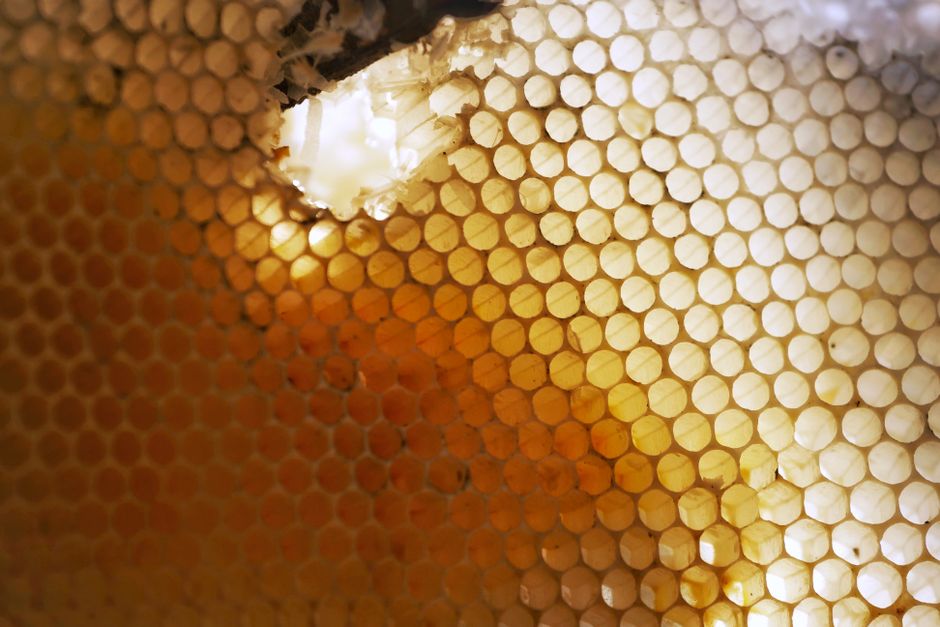
Long before modern wooden beehives, protective bee suits, removable frames, and mechanical honey extractors, the medieval beekeeper practiced a much different form of beekeeping. Working with simple tools and centuries of inherited knowledge, medieval beekeepers managed colonies for two products that were extremely valuable during the Middle Ages: honey and beeswax.
Beekeeping was already thousands of years old by medieval times. Ancient Egyptians practiced organized beekeeping as early as the third millennium BCE, and hive beekeeping eventually spread throughout the Mediterranean and Europe. By the European Middle Ages, honey and beeswax had become important commodities, and bees were commonly kept in baskets, hollow logs, wooden boxes, and even cavities in trees.
For the medieval beekeeper, tending bees was more than a hobby. It could provide food, drink, medicine, lighting, and valuable goods that could be sold or traded.
Two products, enormous value: honey sweetened food, aided medicine, and became mead, while beeswax lit churches, sealed documents, and made reusable writing tablets.
When Did the Medieval Beekeeper Live?
The Middle Ages in Europe are generally considered to have lasted from roughly the 5th century through the late 15th century, beginning after the decline of the Western Roman Empire and ending as Europe moved into the Renaissance.
Throughout this long period, agriculture dominated everyday life. Most people lived in rural communities where food and other necessities were produced locally. Bees fit naturally into this agricultural system.
A medieval beekeeper might have been a farmer maintaining a few hives beside a cottage, a worker tending bees on a large estate, or a monk caring for colonies associated with a monastery.
The importance of beekeeping increased because medieval Europeans had limited access to inexpensive sugar. Honey therefore served as an important sweetener. Beeswax became particularly valuable because churches, monasteries, wealthy households, and other institutions needed candles.
By the High and Late Middle Ages, the religious demand for beeswax was substantial enough to support both domestic production and international trade. Historical research on England between about 1300 and 1555 shows that religious demand helped create a thriving wax trade extending across Europe.
What Did a Medieval Beekeeper Use for a Beehive?
Perhaps the most recognizable symbol of the medieval beekeeper is the skep.
A skep was a dome-shaped basket used as a home for honey bees. Depending on the region and available materials, hives could be constructed from wicker, straw, grass, or similar materials. Some were coated with mud or other substances to provide additional protection.
Unlike a modern Langstroth hive, a medieval skep did not contain removable wooden frames.
The bees simply constructed their comb inside the hive.
That created a major problem: the medieval beekeeper could not easily remove individual frames, inspect the brood, check the queen, identify disease, or harvest capped honey while leaving the rest of the colony undisturbed.
Historical evidence shows that medieval European beekeeping was not limited to skeps. Log hives, box hives, tree hives, and other artificial cavities were also used in different regions.
The hive available to a beekeeper often depended on local traditions and natural resources.
Harvesting Honey Was Much Harder
Honey harvesting would be one of the greatest differences between a modern beekeeper and a medieval beekeeper.
Today, a beekeeper can remove frames of capped honey, extract the honey, and return the empty comb to the colony. Medieval beekeepers had no such convenient system.
Because the comb was permanently attached inside many traditional hives, removing the honey could severely disrupt the colony. Some historical methods involved driving bees from one hive into another. In other situations, harvesting honey and wax could result in the destruction of the colony.
This meant managing bees required careful attention to swarming and colony numbers.
The arrival of spring would have been especially important. A swarm represented an opportunity to increase the number of colonies. The medieval beekeeper therefore had good reason to watch established colonies closely during swarming season.
Catching a swarm could mean another productive hive—and additional honey and wax.
Honey Was a Valuable Medieval Commodity
To understand the importance of the medieval beekeeper, imagine living in a world without supermarkets filled with inexpensive refined sugar.
Honey had enormous practical value.
It could be eaten directly or incorporated into foods and drinks. Honey also had a long history of medicinal use and could be used to produce mead, the fermented beverage made from honey and water.
Monasteries provide a good example of the versatility of bee products. English Heritage notes that medieval monastic honey could be used in cooking, medicines, and mead production.
For a farming household, several successful bee colonies could therefore produce something that was both useful at home and valuable in trade.
But surprisingly, honey was only part of the reason bees mattered.
Beeswax Made the Medieval Beekeeper Essential
One of the most valuable products produced by medieval bees was beeswax.
Electric lighting was centuries away. Medieval homes, castles, churches, and monasteries depended upon fire for illumination.
Cheap candles could be made from animal fat, known as tallow, but beeswax produced a desirable alternative. English Heritage notes that beeswax candles provided brighter light and a sweeter smell than cheaper tallow candles and were used at altars during Mass and before images of saints.
Churches required significant quantities of wax, and religious practices contributed to rising beeswax demand during the High and Late Middle Ages. This demand encouraged widespread domestic beekeeping and supported long-distance European wax trading networks.
Beeswax had other purposes as well.
It could be used for wax writing tablets and document seals. Wax tablets were particularly useful because writing could be scratched into the surface and the tablet reused. Beeswax was also incorporated into other crafts and practical applications.
A productive apiary was therefore capable of supplying several important medieval industries.
Monasteries and Medieval Beekeeping
Monasteries became closely associated with medieval beekeeping.
Monastic communities needed honey for food and medicinal preparations, while beeswax was especially valuable for candles used in religious services. English Heritage's material on medieval monasteries specifically notes that monasteries commonly kept honey bees.
Imagine walking through the grounds of a medieval monastery.
Beyond the stone buildings might be vegetable gardens, orchards, medicinal herbs, livestock, and an apiary. The hum of bees would have been as natural to this landscape as chickens scratching around a farmyard.
The medieval beekeeper tending these colonies needed practical knowledge that could not simply be learned from a modern instruction manual. Much of the craft was based on experience, observation, tradition, and knowledge passed from one generation to another.
The Daily Life of a Medieval Beekeeper
The daily routine of a medieval beekeeper changed with the seasons.
Spring meant checking whether colonies had survived winter and watching for swarms. Summer brought abundant flowers and nectar, along with the need to monitor active colonies. Late summer and autumn could bring honey harvesting and preparations for colder weather.
Winter presented another challenge.
The beekeeper needed colonies strong enough to survive until spring. Hives also had to be protected from harsh weather, animals, thieves, and other dangers. Research into medieval apiculture describes beekeepers protecting hives from weather, theft, and parasites and feeding colonies when necessary.
Without modern equipment or scientific knowledge of bee biology, successful beekeeping depended heavily on close observation.
A skilled beekeeper learned to interpret what was happening around the hive by watching the bees themselves.
The Legacy of the Medieval Beekeeper
Modern beekeeping would be almost unrecognizable to someone from the Middle Ages.
Today's beekeeper can open a hive, remove individual frames, examine brood, monitor pests, locate a queen, harvest honey with an extractor, and return intact comb to the colony.
The medieval beekeeper possessed none of those advantages.
Yet medieval beekeepers successfully maintained honey bee colonies across Europe using comparatively simple equipment. Their work helped supply communities with honey, beeswax, mead ingredients, medicinal materials, and valuable trade goods.
Perhaps most importantly, they helped preserve and develop the human tradition of managing honey bees.
The familiar image of a straw skep surrounded by buzzing bees represents much more than an old-fashioned method of producing honey. It represents centuries of agricultural knowledge developed long before modern apiculture.
From monastery gardens and village farms to forests and large estates, the medieval beekeeper occupied a small but fascinating place in medieval society.
Every jar of honey and block of beeswax represented something valuable. Honey could sweeten food or become mead. Wax could illuminate a church, seal an important document, or provide a reusable writing surface.
For the people of the Middle Ages, bees were not simply interesting insects.
They were an economic resource—and the medieval beekeeper was the person responsible for turning the activity of thousands of honey bees into some of medieval Europe's most useful products.
Medieval Beekeeper: A Tradition That Helped Shape Modern Beekeeping
The story of the medieval beekeeper is ultimately a story of ingenuity.
Working without removable frames, manufactured foundations, modern smokers, extractors, medications, or protective equipment, medieval beekeepers learned to manage colonies with the tools and materials available to them.
Their techniques may appear primitive today, but their contribution to the history of beekeeping was significant. Medieval Europe's demand for honey and especially beeswax helped keep beekeeping widespread and economically relevant for centuries.
The next time you open a modern hive or taste fresh honey, consider how different the experience would have been a thousand years ago.
For the medieval beekeeper, every hive represented food, light, trade, craftsmanship, and survival—and that makes medieval beekeeping one of the most fascinating chapters in the long relationship between humans and honey bees.