
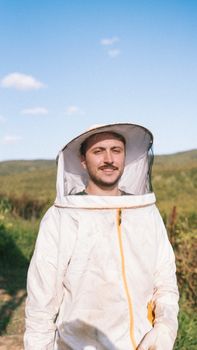
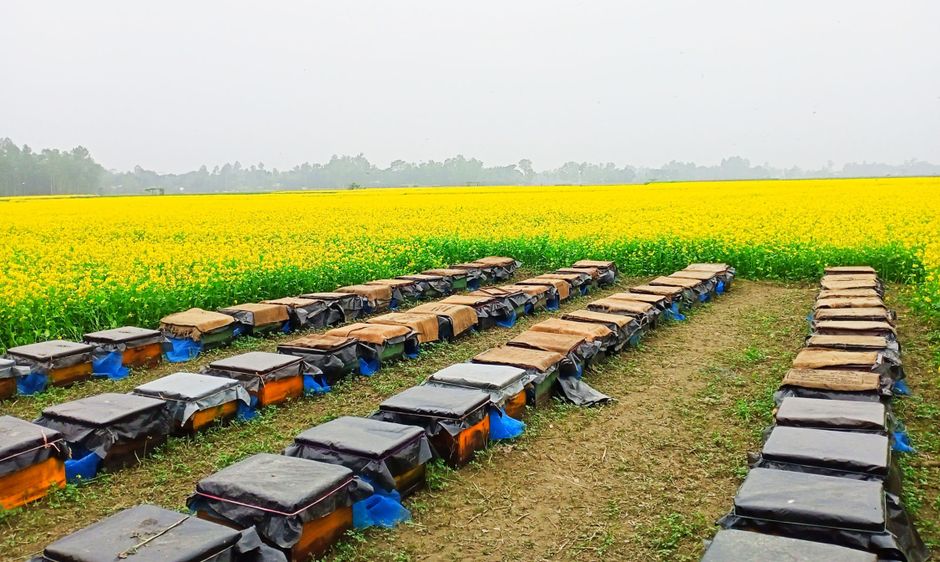
A honeybee farm is much more than a place where honey is produced. Honeybee farms are living agricultural systems where beekeepers manage colonies, raise queens, harvest honey and beeswax, provide pollination services, and help maintain one of agriculture's most important relationships—the connection between bees and flowering plants.
From large commercial apiaries in North America to remote Manuka honey operations in New Zealand, beekeeping takes many forms around the world. Some operations maintain thousands of colonies, while a small family-run honeybee farm might manage only a few dozen hives.
If you have ever wondered what happens on a honeybee farm, where the world's major honey-producing regions are located, or where you can experience beekeeping firsthand, this guide provides an introduction to the fascinating world of honey production.
Big picture: roughly 1.84 million metric tons of honey were produced worldwide in 2024. Commercial beekeeping is genuinely global — and it is about far more than honey.
What Is a Honeybee Farm?
A honeybee farm, commonly called an apiary or beekeeping operation, is a location or network of locations where colonies of honeybees are maintained.
The familiar wooden boxes seen in fields are generally divided into sections containing removable frames. Worker bees build wax comb on these frames, allowing the colony to raise young bees and store pollen and honey.
Depending on its purpose, a honeybee farm may specialize in:
- Honey production
- Pollination services
- Queen bee breeding
- Package bees and nucleus colonies
- Beeswax
- Propolis
- Bee pollen
- Royal jelly
- Beekeeping education
Commercial operations frequently move colonies throughout the year to follow flowering crops or provide agricultural pollination.
How a Honeybee Farm Produces Honey
Honey production begins when worker bees leave their colony searching for nectar.
After locating flowers, the bees collect nectar and transport it back to the hive. Other worker bees help process the nectar before placing it inside honeycomb cells. Moisture is gradually removed until the nectar becomes honey.
When the honey reaches the appropriate moisture level, bees seal the cells with wax.
A beekeeper can then remove frames containing surplus honey and use an extractor to separate the honey from the comb. The extracted honey is typically filtered and bottled.
Importantly, responsible beekeepers leave enough food for their colonies or provide appropriate supplemental feeding when natural forage is inadequate.
Where Are the World's Largest Honey-Producing Regions?
The global honey industry is enormous. According to international production statistics summarized by Agriculture and Agri-Food Canada, approximately 1.84 million metric tons of honey were produced worldwide in 2024.
China was the largest producer, accounting for approximately 444,800 metric tons, or 24.1% of worldwide production. India followed with roughly 146,000 metric tons, while Türkiye produced approximately 95,492 metric tons. Ethiopia, Iran, Argentina, Brazil, Russia, the United States and Mexico were also major producers.
These figures illustrate something important when discussing the world's leading honeybee farm operations: commercial beekeeping is truly global.
Notable Honeybee Farms and Apiary Businesses Around the World
There isn't an authoritative international ranking of individual honeybee farms, so the following should be viewed as examples of notable apiaries, honey producers and commercial beekeeping businesses rather than a definitive ranking.
1. Comvita – Paengaroa, New Zealand
- Location: Bay of Plenty, New Zealand
Comvita is one of the world's best-known names associated with New Zealand Manuka honey and bee products. New Zealand government records identify Comvita New Zealand Limited in Paengaroa as an apiary owner/local supplier of honey and bee products, while its honey-processing operation is also officially listed by New Zealand's Ministry for Primary Industries.
New Zealand is particularly famous for Manuka honey, produced when bees forage on the native Manuka plant.
2. Buzz Apiaries – Katikati, New Zealand
- Location: Bay of Plenty, New Zealand
Buzz Apiaries is another New Zealand apiary business appearing in government export records. It is identified as an apiary owner involved with honey, honey products and other bee products.
The Bay of Plenty provides an excellent example of how a modern honeybee farm can benefit from New Zealand's diverse vegetation and strong honey industry.
3. Helena Bay Honey – Northland, New Zealand
- Location: Kerikeri/Northland, New Zealand
Helena Bay Honey New Zealand Limited is also listed by New Zealand authorities as an apiary owner and local supplier producing honey and bee products.
Northland's warm climate and native vegetation make this region particularly interesting for people researching premium New Zealand honey.
4. Egmont Honey – Taranaki, New Zealand
- Location: New Plymouth/Taranaki, New Zealand
Egmont Honey is another significant New Zealand honey business with apiary operations. Government records identify Egmont Honey as an apiary owner and supplier, and its processing operation appears on New Zealand's official honey listings.
5. Forest Gold Honey – West Coast, New Zealand
- Location: Greymouth, West Coast, New Zealand
Forest Gold Honey is listed as an apiary owner and honey supplier based around Greymouth on New Zealand's rugged West Coast.
The region demonstrates how the surrounding environment can give honey distinctive characteristics depending upon the plants available to bees.
6. Alpine Honey Specialties – Otago, New Zealand
- Location: Hawea Flat, Otago, New Zealand
Alpine Honey Specialties is identified as a honey farm in Hawea Flat in New Zealand's South Island.
Mountainous areas such as Otago provide a dramatically different environment from subtropical honey-producing areas, demonstrating the enormous geographic diversity possible in beekeeping.
7. Australian Honey Producers and Apiaries – Tasmania, Australia
- Location: Tasmania, Australia
Tasmania has a significant beekeeping industry and is particularly associated with distinctive regional honeys. Australian Honey Products is one example of a Tasmanian honey business appearing in published honey-farm databases.
Tasmania also regulates commercial beekeeping. Beekeepers must register, and operations managing 20 or more hives have additional compliance requirements under the state's system.
8. Commercial Apiaries – Alberta, Canada
- Location: Alberta, Canada
Rather than one dominant honeybee farm, Alberta has a large commercial beekeeping sector composed of numerous producers.
Canada's government statistics consistently identify Alberta as one of the country's important beekeeping regions. Canada as a whole produced approximately 35,460 metric tons of honey in 2024.
9. Commercial Honey Farms – Argentina
- Location: Pampas and other agricultural regions of Argentina
Argentina is one of the world's major honey-producing and exporting nations. The country produced approximately 69,298 metric tons of honey in 2024 and exported more than 90,000 metric tons in 2025, according to international trade statistics.
Many Argentine beekeepers operate migratory apiaries across vast agricultural landscapes.
10. Commercial Honeybee Farms – Türkiye
- Location: Black Sea, Aegean and Mediterranean regions of Türkiye
Türkiye has one of the world's oldest and most significant beekeeping traditions. The country produced approximately 95,492 metric tons of honey in 2024, placing it among the world's largest producers.
Different regions produce distinctive varieties, including pine honey and numerous floral honeys.
Visiting a Honeybee Farm
Visiting a honeybee farm can be an excellent way to learn how honey moves from flower to jar.
Some apiaries offer educational tours where visitors can observe bees through demonstration hives, watch honey extraction, learn how queens are raised, sample different varieties of honey and purchase locally produced beeswax products.
Before visiting, always check whether the farm actually offers public tours. Many commercial apiaries are working agricultural operations and aren't open to visitors without an appointment.
Starting Your Own Honeybee Farm
You don't need thousands of colonies to start a honeybee farm. Many successful beekeepers begin with only two or three colonies.
Beginners should first learn basic hive management, honeybee biology, swarm prevention, queen management, seasonal feeding and pest control—especially management of Varroa mites.
Local regulations should also be researched before purchasing bees. Some jurisdictions require apiary registration or regulate where colonies may be located.
A small operation can gradually expand as the beekeeper gains experience.
Why Honeybee Farms Matter
The importance of a honeybee farm extends beyond jars of honey.
Managed honeybee colonies provide valuable pollination services to agriculture. Bees also produce useful products such as beeswax, propolis, pollen and royal jelly while supporting businesses ranging from queen breeding to agricultural pollination.
Modern technology is even changing how colonies are managed. Companies such as Beewise are developing systems using robotics, computer vision and artificial intelligence to monitor and manage honeybee colonies.
The Future of the Honeybee Farm
The honeybee farm of the future may look considerably different from the traditional apiary.
Remote hive monitoring, electronic scales, temperature sensors, automated feeding systems and artificial intelligence are giving commercial beekeepers new ways to monitor colony health.
At the same time, successful beekeeping will always depend on understanding the fundamentals: healthy queens, strong colonies, abundant forage and careful management.
Whether you are interested in producing your own honey, becoming a commercial beekeeper or simply visiting an apiary, exploring a honeybee farm offers a fascinating look into one of agriculture's oldest partnerships.
From the Manuka-producing regions of New Zealand to the commercial apiaries of Canada, Argentina, Türkiye and the United States, honeybee farming remains a worldwide industry built around one extraordinary insect.
And the next time you open a jar of honey, remember that its journey probably began miles away from the hive—with thousands of worker bees visiting millions of flowers one tiny drop of nectar at a time.